
As a nonprofit fundraising professional, you’re probably always looking for ways to boost your organization’s revenue generation efforts. While there are many ways to go about this, from implementing more sustainable funding streams to testing out new event ideas, one of the best ways to bring in larger gifts from more dedicated donors is to re-evaluate your approach to prospect research.
DonorSearch’s prospect research guide defines this term as “a technique used by nonprofit fundraisers, major gift officers, and development teams to identify high-impact donors within and beyond an organization’s current donor pool. Through this process, nonprofits gather an immense amount of data—information about donors’ backgrounds, past giving histories, wealth indicators, philanthropic motivations, and more details that help determine prospects’ likelihood of giving.”
Whether you’re just getting started with prospecting or already have a donor screening process that you think could be more effective, you’ve come to the right place! Let’s explore three tips for improving your prospect research process so you can find more high-impact donors for your mission.
1. Ensure Your Prospect Screenings Are Comprehensive
In discussions of prospect research, you might hear the term “wealth screening” come up. Traditional wealth screening evaluates potential donors’ financial situations to determine whether they have the capacity to make a major gift.
However, if your donor research stops at wealth, you aren’t getting a complete picture of who your best prospects truly are. After all, even if a potential donor could give a large donation to your nonprofit, there is no guarantee that they’d want to do so.
Conducting wealth and philanthropic screening takes this willingness piece into consideration by analyzing the following three types of data (also known as markers or indicators):
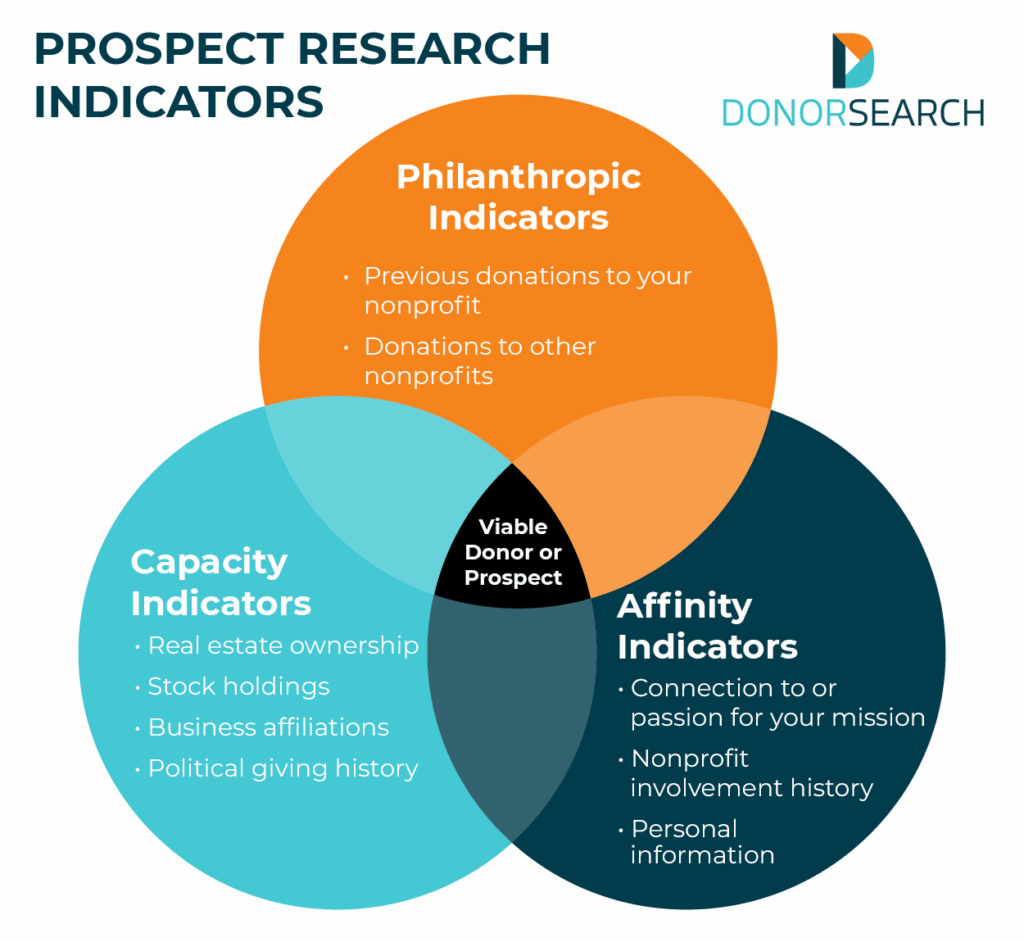
- Capacity indicators encompass the information that wealth screening typically uses to judge financial giving ability, including real estate ownership, stock holdings, business affiliations, and political giving history.
- Philanthropic indicators show whether a prospect has charitable tendencies. The best markers of this generosity are past donations to your organization and gifts to similar nonprofits.
- Affinity indicators let you know if a prospect would want to give to your specific organization. These include a connection to or passion for your mission, a history of non-donation nonprofit involvement (volunteering, event attendance, board service, etc.), and other relevant personal information like interests and values.
For a prospect to be worth your nonprofit’s time to acquire as a major donor, they need to exhibit indicators in all three categories. Some markers will be more important for certain initiatives than others—for example, you might look more closely at interests and values when soliciting capital campaign contributions (to ensure these characteristics align with the campaign’s specific goals) than you would while seeking more generic annual fund donations.
2. Incorporate AI Tools Into Prospecting
As of 2025, more than 85% of nonprofits are exploring tools powered by artificial intelligence (AI), meaning a technology that was once called the future of nonprofit fundraising has made its way into the present. And although AI can support many of your nonprofit’s activities, one of the best opportunities for its application is prospect research.
There are two major types of nonprofit AI tools you could leverage—here is a quick overview of how both are useful in different ways for prospecting:
- Predictive AI solutions are designed to analyze datasets, recognize trends and patterns, and make suggestions based on those findings. Once your nonprofit has gathered prospect research data, you can use a predictive analytics tool to prioritize your list of candidates based on which ones are most likely to respond to outreach, make a first major gift, become repeat donors, and more.
- Generative AI platforms create original content (text, images, videos, etc.) based on the data they’re trained on and user prompts. Many widely used tools in this category can help you develop tailored materials to guide prospects through their journeys with your organization (more on this later!). However, there are also specialized prospect reporting tools on the market that use generative AI to quickly summarize the most important information about each potential donor for easy reference.
No matter how you incorporate AI into prospect research, make sure to do so responsibly. AI tools should work with your nonprofit’s values, not against them. As part of your strategy, create an AI usage policy that ensures your team adheres to data privacy standards and relevant legislation, along with prioritizing transparency, accountability, and inclusivity, while leveraging these tools.
3. Reference Prospect Research Data Throughout the Entire Donor Journey
Many nonprofits’ reliance on prospect research results begins and ends with outreach to potential major donors. But while this data is most obviously useful at the acquisition stage of the donor lifecycle, it continues to be valuable throughout a prospect’s journey with your organization.
Here are some ways to leverage the information you gather through prospecting as a supporter moves through the phases of the donor lifecycle:
- Cultivation: Design a follow-up strategy and provide engagement opportunities that align with the prospect’s professional and personal interests. For example, you might introduce a potential donor with a background in finance to your treasurer so they can discuss your organization’s financial situation in depth, or send a music-loving prospect a personalized invitation to your upcoming benefit concert.
- Solicitation: Revisit a prospect’s giving capacity and philanthropic history to determine an ask amount to which they’ll be amenable, and consider their affinity indicators when proposing designations for their first major gift.
- Stewardship: As eCardWidget’s guide to thanking donors recommends, use your collected data on each donor to personalize their appreciation messages with rich details of their giving and engagement history. You might also consider their interests and values when choosing a recognition method, especially if you aren’t sure whether to thank them publicly or privately.
- Retention: Similar to your cultivation efforts, reference donors’ involvement history and background as you work to keep your organization top of mind and offer additional engagement opportunities that resonate with them.
- Upgrade: Stay on top of any changes to donors’ financial situations and donations they make to other nonprofits after they’ve contributed to yours so you can correctly time appeals for repeat gifts and suggest reasonable increases in their contributions.
Keep your prospect research database and AI fundraising tools handy throughout this process, and make sure to update current and potential donors’ CRM profiles with any new information you learn about them so you’re always fully informed on their ability and willingness to give.
A fine-tuned prospect research process is essential for your nonprofit to boost its revenue generation, especially given how critical major gifts likely are in funding your most important initiatives. Take some time to evaluate your current approach to major donor fundraising, then use the tips above to refine your strategy and lay the groundwork for more successful donation requests and stronger supporter relationships.