Your nonprofit’s programs have the power to change lives, but only if people know about them and participate. Every day, valuable services go unused because people face barriers to joining, don’t immediately see the value, or simply never hear about them.
Whether your nonprofit offers educational workshops, support services, or other helpful programs, you’ll make a bigger difference by reaching more people! Plus, today’s program participant might become tomorrow’s volunteer, advocate, or peer-to-peer fundraiser, helping you expand your reach even further.
You know your programs are worth attending. It’s just a matter of bringing attention to them and making getting involved easy. The good news is that you don’t need a huge budget or a massive marketing team to boost participation. All you need is a few targeted promotional strategies to fill seats. Let’s start with how you can make your programs easy to join!
Remove barriers that keep people from joining.
Even the strongest programs can struggle if participants face obstacles to signing up. Start by identifying and removing those barriers so signing up is easy and inviting.
Some common reasons that deter people from participating in nonprofit services include:
- Lack of awareness or application information: People might not know about your programs or understand how to apply.
- Stigma around receiving support: Depending on the services you offer, some people might feel judged for participating. For example, someone might not join a free meal or job placement program to avoid being seen as unable to provide for themselves or their family.
- Transportation issues: Limited, costly, or unreliable transit can make in-person attendance difficult.
- Language barriers: Limited English skills can block access to key information about your nonprofit’s services.
- Financial strain: Extra costs, like paying for transportation or internet, can create barriers, even for free programs.
- Complex signup processes: Some participants may avoid applying if there are complicated rules or paperwork.
Think about your audience and what barriers they might face. You might even create an automated campaign to survey recent participants about what would make it easier for them to participate. Then, brainstorm practical fixes with your team, like simplifying forms or offering translation services.
For example, imagine that your nonprofit offers free computer classes and notices low attendance from certain neighborhoods. After realizing many residents don’t have sufficient transportation, your team arranges a weekly shuttle from those areas to the program site, making it easier for people to attend.
Boost program visibility with Google Ads.
Google Ads help people actively searching for resources and programs like yours find your nonprofit. That means you can reach people at the exact moment they need you.
Usually, it costs money to run Google Ads. However, Getting Attention explains that eligible nonprofits can receive up to $10,000 each month to create Google ads and bid on cause-related keywords. These ad credits provide a free way to promote your most important web pages, like your program pages or donation form.
Here’s what a Google Ad might look like for a nonprofit seeking volunteer youth mentors:
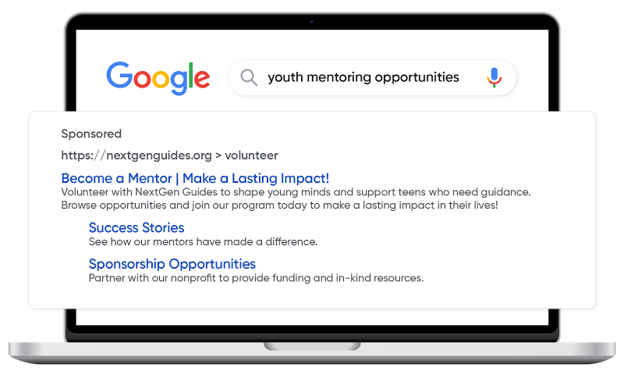
Alt text: A hypothetical Google Ad from a nonprofit, urging people to become youth mentors.
Follow these best practices to promote your programs with Google Ads:
- Choose relevant keywords. Think like your audience. What would a potential participant type into Google to find your services? This could be “free job training,” “adult literacy classes,” or “food pantry near me.”
- Write clear, inviting ad copy. Highlight the main benefit of your program and include a strong call-to-action, such as “Register today” or “Get free help now.”
- Link to a focused landing page. Don’t just send people to your homepage. Instead, promote pages that clearly explain your program and include registration forms.
- Use targeting features to reach your audience. Within your settings, set location, age range, and interest parameters so your ads are seen by those most likely to join your programs.
For example, let’s say you run free job training workshops. Your ads might show up for searches like “learn job skills” or “free resume help.” With help from geographic targeting, you can reach people in your community, leading them directly to a sign-up page with workshop date, locations, and an easy registration form.
If you need help with your ads, consider working with a Google Ad Grant manager. These experts can create compelling ads, fine-tune targeting, and ensure you choose the right keywords.
Grow your presence in the community.
Getting your nonprofit’s name out in your community can help you earn trust and create a network of advocates for your programs. Here’s how to grow your local presence:
- Partner with trusted groups. Collaborate with schools, faith groups, and local businesses to tap into their networks. For example, maybe one of your corporate sponsors will let you set up a table in front of their business to chat with customers.
- Leverage word-of-mouth. Encourage past participants to invite friends and share personal testimonials. These authentic stories often inspire action better than cold outreach.
- Show up in person. Send representatives to community events, fairs, and neighborhood gatherings to share information and answer questions face-to-face.
- Use local outreach tools. Post flyers on community bulletin boards, hand out materials at libraries or coffee shops, and share updates on local social media groups to reach people in different ways.
- Use social listening. Monitor local conversations on social media or in online community groups. This can help you spot upcoming events, trending issues, and opportunities to join discussions that matter to your audience.
Community connections aren’t built overnight, but consistent involvement can make your programs a familiar and trusted resource, helping you source new participants
Share inspiring stories from past participants.
Nothing builds trust like a success story! Storytelling is a powerful form of content marketing. Real stories put a human face on your work and show the difference your programs make. When someone hears how you’ve helped others in similar situations, it’s easier for them to picture experiencing the benefits for themselves.
Here are some ways to collect and tell these stories:
- Ask for testimonials. Invite past participants to share what they gained from your program, whether it’s new skills, a better job, or a stronger support system. You might put out an open call for testimonials or reach out to individuals directly. Also, consider asking on-the-ground staff members or volunteers to share their experiences.
- Highlight diverse voices. Feature participants of different ages, backgrounds, and experiences, so more people can see themselves reflected in your work.
- Pair stories with data. UpMetrics’ impact measurement guide explains that measuring organizational results provides evidence of your impact, making it easier to share emotional stories and raise awareness for your programs. For example, share numbers like “we helped 4,000 local families put food on the table last year” or “90% of students improved their reading levels by an average of two grades in just one year.”
- Tell stories across multiple formats. Share clips from interviews on social media, post stories on your blog, and feature quotes on your program pages. The more ways you share stories, the more likely people are to see them.
When telling stories, always get permission and consider whether participants want their name, photo, or other details included. Even an anonymous quote can be powerful if it’s heartfelt and specific.
Additionally, consider how you can back up stories with data. Imagine a former participant explaining, “Before joining the program, I didn’t think I’d ever find steady work. After the coaching, I started a full-time job I love and feel confident in my ability to grow my career.” Paired with an impact statistic like “Our training program has helped 200 people secure jobs in the past year,” that story becomes even more persuasive.
Final Thoughts
Every empty seat in your nonprofit program represents a missed opportunity to make an impact. Boost participation by making sure people hear about your organization, your programs are easy to join, and individuals feel inspired to take part.
With the right mix of visibility, connection, and outreach, you can transform interest into action and ensure the right people are joining your programs.