Launching a pledge fundraiser is a great way to increase supporter engagement and raise funds for your cause. By soliciting commitments to donate from contributors over the course of the fundraising period, you’ll generate momentum for your mission that will carry you forward, long after you’ve reached your campaign goal!
Since most pledge fundraisers rely on the peer-to-peer model, which encourages stakeholders to involve their networks in fundraising efforts, your nonprofit will connect with new audiences and future supporters. To make the most of this format, you’ll need a strong marketing strategy that entices current supporters to share your campaign and resonates with new audiences.
In this guide, we’ll walk through four steps to ensure you’re prepared to capitalize on the benefits of a pledge fundraiser.
- Develop a unified campaign message.
- Select communication channels.
- Tailor your messages.
- Leverage participant networks.
Let’s get started!
1. Develop a unified campaign message.
Every successful marketing campaign starts with a clearly defined message that serves as a common thread across each social media post, email, text message, or mailer. This gives your community a vision for the work your pledge fundraiser will enable.
Your campaign message should be extremely short and easy to recall, ideally falling between two to seven words long. Think of this message as one that captures the audience’s attention and summarizes the purpose of the fundraiser rather than communicating every nuance of your cause.
Here are a few examples of successful campaign messages to take inspiration from:
- “Take Yourself Funny for Money” is Comic Relief’s catchphrase for 2026 Red Nose Day.
- “A Mother of a Movement” is the slogan for March of Dimes’ March for Babies campaign.
- “Nature Needs Us Now” is the World Wildlife Fund’s (WWF) 2025 campaign message.
All of these examples encapsulate the essence of the mission and the campaign, from Comic Relief’s use of “yourself” to invite individuals to participate, to the urgency of “needs” in the WWF slogan.
With those examples in mind, also think through the following three factors as you draft your campaign message:
The format of the fundraiser
Is your fundraiser taking place entirely online, ending with a laid-back virtual meetup? Or, is it culminating in a high-energy, in-person event, like a Fun Run race? Defining the format can help set the tone for the overall campaign and, therefore, your central message. Additionally, you’ll be able to brainstorm specific ways to tie the message into your campaign, like creating a unique hashtag for a virtual event or making posters for an in-person celebration.
Your intended audience
Your target audience is the people who will support your fundraiser by participating or donating, so it’s critical that you make a compelling case for them to support it. Connect with your audience by amplifying their interests.
For instance, 99Pledges recommends that sports teams lean into a theme in their fundraisers, like a Hit-a-thon for baseball teams. Then you can amplify the connection in your marketing messages.
The way you’ll communicate
While you may not have selected the exact channels you’ll use during your campaign yet, it’s key to have an idea of the media you’ll use to convey your message. For example, you’ll most likely need to communicate the message through text, graphics, and video—will it be easy to understand in each of these formats?
2. Select communication channels.
In the age of advanced technology, it’s easier and more affordable than ever to reach your audience through multiple communication channels. Plus, as a nonprofit, you may have access to grants or exclusive discounts that make paid media more accessible. By using multiple channels, you’ll increase the likelihood of reaching your target audience and making a strong impression on them.
Using a mix (or all) of the following channels will be most effective for marketing a pledge fundraiser:
- Social media
- Search engines
- Text
- Direct mail and print newsletters
- Flyers
If you have a few different platforms in your marketing mix, it can quickly become overwhelming to manage posting regularly across all of them. Consider using a marketing tool like social media scheduling software to build a calendar of posts ahead of time that will go live automatically.
Additionally, each of these channels should lead back to a high-quality webpage dedicated to your pledge fundraiser. Make sure to add links to your pledge page where supporters can sign up to participate or donate, and incorporate details like when the fundraiser will end, how to find personal donation pages belonging to individual participants, and the logistics of any events you’ll hold.
3. Tailor your messages.
With any marketing you do in support of your cause, personalization can be the difference between your message hitting home or hitting the snooze button. For pledge fundraisers are no exception. When you develop your campaign to current stakeholders and more broadly, keep these simple ways to customize your marketing messages in mind:
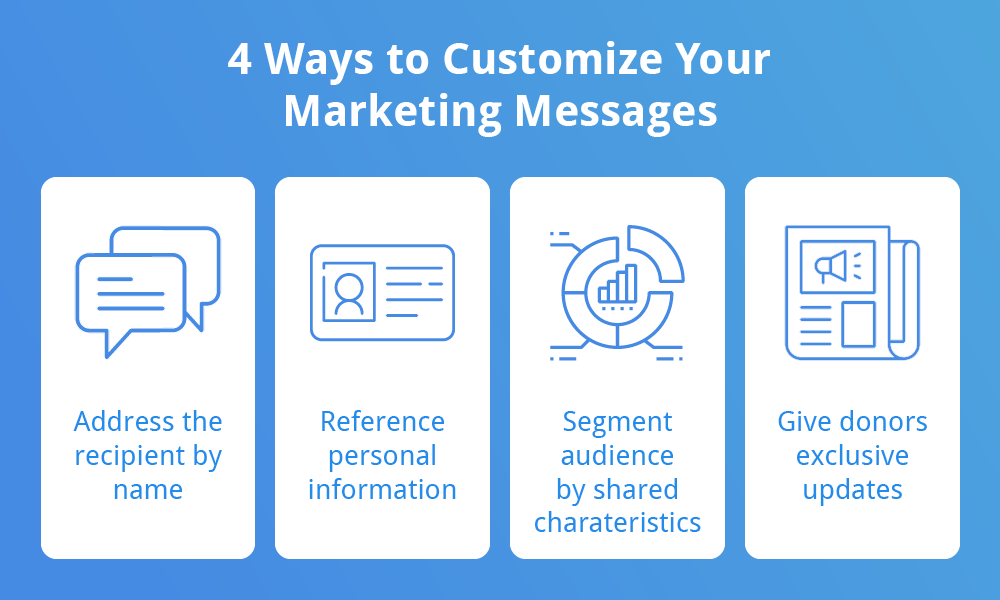
- Address them by name. If you are using a more personal method of communication, like email or pledge cards, including the donor’s name in the greeting can add a warm touch. For best results, Fundraising Letters’ guide to pledge cards recommends briefly explaining the purpose of the campaign, what donations will accomplish, a suggested pledge amount, and payment options.
- Reference personal details. Perhaps you know which participant the donor supported during previous fundraisers, or maybe you can reference other past involvement with your organization. Calling out specific details about the donor and their relationship with your nonprofit recognizes their support and makes them feel valued.
- Segment your audience. Segmentation can make it easier to infuse a personal touch into your messages. You might sort your audience by average donation amount, for example, and request varying pledge amounts for each group.
- Provide donor-exclusive updates. Make anyone who pledged a gift to your campaign feel like they are part of an exclusive club by providing regular updates about your fundraising progress. For example, if you are fundraising for your school in order to buy new textbooks, you can use a fundraising thermometer to show donors how close you are to reaching this goal.
4. Leverage participant networks.
The secret weapons of pledge fundraisers are your current supporters and participants. The marketing your team does on behalf of your campaign can be amplified tenfold or even hundredfold if you create the right environment for your supporters to participate in promotion as well.
Just as you identified your campaign’s target audience when creating your marketing assets, identify who your loyal supporters are and invite them to be ambassadors for the pledge fundraiser. This can be as formal or laid-back as you need it to be, ranging from designated activities for them to complete to a general call asking supporters to reshare a post on their social media pages.
You’ll want to make it as easy as possible for them to promote the campaign. If you are asking supporters to share their own individual posts on social media, provide them with graphics and suggested copy they can personalize. In addition to removing the obstacle of coming up with their own image and wording, this also ensures their promotion will align with the overall campaign message, while still giving them room to make it their own.
Taking the time to plan, execute, and evaluate a comprehensive marketing campaign for your pledge fundraiser will set your nonprofit’s future fundraisers up for success. Just as you invite your current supporters to get involved with this campaign, the new supporters you reach through your marketing efforts will be able to share your mission even more widely in the next fundraiser.